
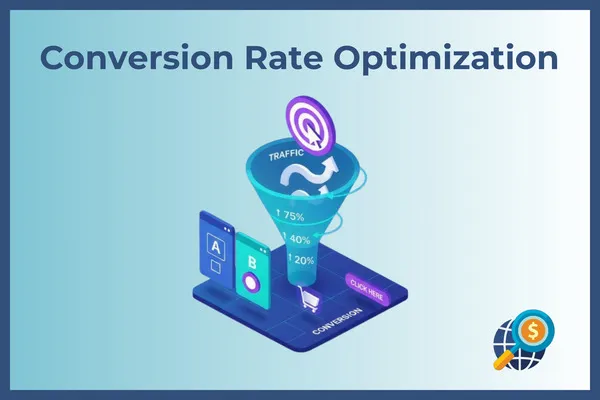
📈 Your Checkout Page is Hemorrhaging Money While Competitors Print Cash
Your checkout page converts at 2% while your competitors consistently hit 8-12%, meaning for every 100 visitors, you're losing 6-10 potential customers that your competition captures effortlessly. You've invested thousands in driving traffic through ads, SEO, and content marketing, only to watch 98% of your visitors abandon their carts at the final step.
Meanwhile, your competitors are quietly implementing psychological triggers and micro-optimizations that transform their checkout pages into conversion machines. They're not just capturing more sales – they're building customer databases, increasing average order values, and creating repeat buyers while you're stuck wondering why your traffic doesn't translate to revenue.
The old playbook of slapping a "secure checkout" badge and calling it a day died in 2020. Today's consumers expect frictionless experiences, intelligent form design, and checkout flows that anticipate their concerns before they even arise. The businesses thriving in 2024 understand that conversion rate optimization isn't about tricks – it's about removing every microscopic barrier between your customer's desire and their purchase.
🔍 Five Checkout Optimizations That Transform Browsers Into Buyers
1. Progress Indicators That Create Momentum Instead of Anxiety
Traditional checkout pages dump customers into a seemingly endless form without context, causing immediate abandonment. Smart businesses now implement visual progress bars showing exactly three steps: "Shipping Info → Payment → Confirmation." This simple addition increases completion rates by 28-39% because it transforms an unknown journey into a manageable task.
The psychology is powerful – humans are hardwired to complete tasks they've started, especially when the end is visible. Companies like Warby Parker take this further by showing time estimates ("2 minutes to complete") alongside their progress bars. When you combine this with auto-save functionality that remembers partially completed forms, you're essentially eliminating the two biggest checkout fears: losing progress and time uncertainty.
2. Guest Checkout That Converts 45% More First-Time Buyers
Forcing account creation before purchase is the equivalent of asking for someone's phone number before they've said hello. Yet 24% of businesses still make this fatal error. Amazon discovered that offering prominent guest checkout options increased first-time buyer conversions by 45%, and they've built an empire on reducing friction.
The smart approach? Offer guest checkout as the default option, then gently convert these customers post-purchase with incentives like "Save 10% on your next order by creating an account." Fashion retailer ASOS implemented this strategy and saw their account creation rate actually increase by 20% because customers were making the choice without pressure. Place your guest checkout button prominently above the login form, use clear language like "Checkout as Guest - No Account Needed," and watch your abandonment rate plummet.
3. Dynamic Trust Signals That Address Real-Time Concerns
Static security badges are yesterday's news. Modern conversion optimization uses dynamic trust signals that appear exactly when customers need reassurance. When someone hovers over the CVV field, show a tooltip explaining your PCI compliance. When they enter their email, display "We'll never spam you - unsubscribe anytime."
Tools like TrustPulse and Proof show real-time purchase notifications ("Sarah from Boston just bought this item"), creating social proof at the moment of decision. One furniture retailer increased conversions by 31% simply by showing "117 people are viewing this product" on their checkout page. These micro-reassurances work because they address unspoken concerns before they become abandonment triggers.
4. Smart Form Design That Reduces Cognitive Load by 60%
Every additional form field decreases conversion by 5%. Yet most checkout pages still ask for information they don't actually need. The solution? Implement smart form design that uses Google's autocomplete API to fill addresses with just a zip code, automatically formats phone numbers as users type, and eliminates redundant fields like "Company Name" unless absolutely necessary.
Shopify's research shows that single-column forms outperform multi-column layouts by 15.4% because they reduce eye movement and decision fatigue. Group related information visually (shipping details in one section, payment in another), use inline validation that shows green checkmarks for correctly filled fields, and implement input masks that automatically format credit card numbers. These micro-optimizations compound – businesses implementing all three see average conversion increases of 23%.
5. Exit-Intent Recovery That Captures 15% of Lost Sales
When someone moves their cursor toward the browser's back button or address bar, you have exactly one chance to save the sale. Exit-intent popups that offer immediate value ("Wait! Here's 10% off your order") recover an average of 10-15% of abandoning visitors. But the key is sophistication – not desperation.
Beardbrand uses exit-intent to offer free shipping on orders over $50 when someone's cart is at $47. This strategic approach increased their average order value by 18% while reducing abandonment. Use tools like OptinMonster or Privy to trigger different offers based on cart value, returning visitor status, or page engagement time. The message matters too – "Complete your order in the next 10 minutes and get free expedited shipping" creates urgency without seeming pushy.
🤔 Did You Know? Statistics That Should Keep You Up at Night
The adaptive content publishing market is set to explode from its current valuation to a staggering USD 36.76 billion by 2035, with the U.S. segment alone growing from USD 2.58 billion in 2025 to USD 12.87 billion, according to a recent GlobeNewswire report. This five-fold growth in just 10 years reveals a harsh truth: businesses that aren't personalizing their content and checkout experiences based on user behavior are already becoming obsolete.
What this means for your business is simple yet profound – your competitors are investing heavily in AI-driven personalization that adapts checkout flows, product recommendations, and even pricing based on individual user behavior. While you're showing the same static checkout page to everyone, they're dynamically adjusting form fields, payment options, and trust signals based on whether someone's a first-time visitor from mobile or a returning desktop customer. The companies capturing this explosive market growth aren't just optimizing their conversion rates – they're creating entirely different experiences for each visitor.
❓️ Ask Robert: Q&A
Question: "Robert, I run a small outdoor gear shop online and my checkout abandonment rate is 71%. I've tried adding security badges and simplifying my forms, but nothing seems to move the needle. My competitors seem to convert everyone who lands on their site. What am I missing?"
Answer:
Your 71% abandonment rate is actually close to the industry average of 70.19%, but that doesn't mean you should accept it. The issue isn't that you're doing something wrong – it's that you're not doing enough things right simultaneously. Conversion optimization is like a leaky bucket; fixing one hole while ignoring five others won't stop the water from draining. Start by implementing just one of the strategies from today's newsletter completely – I'd suggest the progress indicator with time estimates since it's the easiest win.
Here's where Innovacious can transform your situation: we don't just give you a list of optimizations to try. We analyze your specific checkout flow, identify the exact friction points causing abandonment, and create a prioritized roadmap based on your actual data. We've helped businesses reduce checkout abandonment by up to 40% in just 90 days by implementing personalized checkout experiences that adapt to each visitor's behavior. Schedule a free consultation and we'll show you exactly where your checkout is failing and provide three immediately actionable fixes you can implement this week.